Ever wonder how a small, frightened group of followers turned into a movement that shook the world? That’s exactly what happens in the opening chapters of the Book of Acts.
Think of Acts 1–7 like a spark hitting dry timber. At first, there’s waiting. Then there’s wind. Then—boom—the fire spreads. In these chapters, we witness the birth of the Church, the coming of the Holy Spirit, bold preaching, miracles, unity, persecution, and the first martyr. By the end of chapter 7, the Gospel is unstoppable.
Let’s walk through this powerful beginning together.
Acts 1: The Waiting Room Before the Wind
What do you do when God tells you to wait? That’s where Acts begins.
Jesus appears to His disciples after the resurrection and gives them one final promise:
“But ye shall receive power, after that the Holy Ghost is come upon you: and ye shall be witnesses unto me…” (Acts 1:8, KJV)
Then He ascends into heaven from the Mount of Olives.
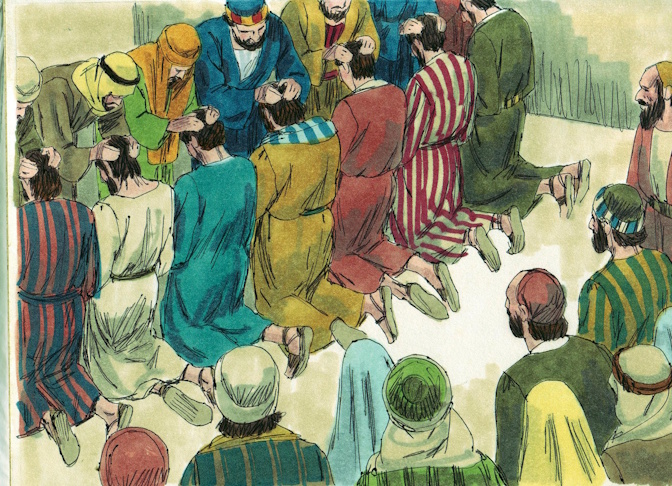
Instead of rushing ahead, the disciples obey. About 120 believers gather in prayer, replacing Judas with Matthias and preparing their hearts.
Why this matters:
Before there was power, there was obedience. Before preaching, there was prayer. Studies from the Barna Group show that consistent prayer correlates strongly with active faith engagement among believers today. The pattern hasn’t changed.
Quote: Billy Graham once said, “Prayer is simply a two-way conversation between you and God.”
Practical Tip: If you’re in a season of waiting, don’t waste it. Pray. Prepare. Trust that God is positioning you for what’s next.
Acts 2: The Day Heaven Touched Earth
Suddenly—like a rushing mighty wind—the Holy Spirit fills the house. Tongues of fire appear. The disciples speak in other languages.
Pentecost wasn’t subtle. It was supernatural.
Peter, once the disciple who denied Jesus, now stands boldly and preaches. About 3,000 people are saved that day.
“Repent, and be baptized every one of you…” (Acts 2:38, KJV)
The early church is marked by devotion, fellowship, breaking of bread, and prayer.
Why this matters:
This is the birth of the Church. Research from Pew shows that transformative religious experiences often happen in communal settings—just like Pentecost.
Quote: A.W. Tozer wrote, “If the Holy Spirit was withdrawn from the church today, 95% of what we do would go on and no one would know the difference.” Acts 2 reminds us that true power comes from Him.
Practical Tip: Ask daily for the Holy Spirit’s guidance. The same Spirit that empowered Peter empowers believers today.
Acts 3–4: Bold Faith in the Face of Pressure
What happens when faith gets public?
Peter heals a lame man at the temple gate called Beautiful. The miracle draws a crowd, and Peter preaches again—pointing everything back to Jesus.
But not everyone cheers. The religious leaders arrest Peter and John.
Still, Peter declares:
“For we cannot but speak the things which we have seen and heard.” (Acts 4:20, KJV)
The believers pray—not for safety—but for boldness.
Why this matters:
Opposition didn’t stop the early church; it strengthened it. Studies in sociology of religion show that faith communities under pressure often grow stronger in conviction and unity.
Quote: Martin Luther King Jr. said, “Faith is taking the first step even when you don’t see the whole staircase.”
Practical Tip: When facing resistance, pray for courage—not comfort.
Acts 5: Purity, Power, and Persecution
Here’s where things get serious.
Ananias and Sapphira lie about their offering—and face immediate judgment. It’s sobering. God makes it clear that the Church is holy ground.
Meanwhile, miracles multiply. The apostles are jailed again—but an angel frees them.
When brought before the council, they boldly say:
“We ought to obey God rather than men.” (Acts 5:29, KJV)
Gamaliel wisely warns the council that if this movement is from God, it cannot be overthrown.
Why this matters:
Integrity fuels spiritual power. According to Gallup research, trust and transparency are foundational to strong communities.
Quote: John MacArthur once noted, “The church must maintain purity if it is to maintain power.”
Practical Tip: Guard your integrity. Private honesty sustains public witness.
Acts 6: Solving Problems Without Losing the Mission
Growth brings challenges.
A complaint arises about neglected widows. Instead of ignoring it, the apostles appoint seven men—full of the Spirit and wisdom—to oversee daily distribution.
This allows the apostles to stay focused on prayer and the Word.
The result?
“And the word of God increased…” (Acts 6:7, KJV)
One of the seven is Stephen—a man described as full of faith and power.
Why this matters:
Healthy churches address practical needs while protecting spiritual priorities. Organizational research shows that delegating responsibilities increases overall effectiveness.
Quote: Rick Warren says, “God’s work done God’s way will not lack God’s supply.”
Practical Tip: Don’t try to do everything yourself. Delegate wisely so you can focus on your calling.
Acts 7: Stephen’s Stand That Changed History
Sometimes faith costs everything.
Stephen delivers a sweeping sermon recounting Israel’s history and confronting the leaders’ rejection of God’s messengers—including Jesus.
Enraged, they stone him.
But as he dies, Stephen sees Jesus standing at the right hand of God and prays:
“Lord, lay not this sin to their charge.” (Acts 7:60, KJV)
Among those watching? A young man named Saul.
Why this matters:
Stephen’s death becomes the spark for wider evangelism—and eventually, Saul’s transformation into Paul. Persecution scattered believers, spreading the Gospel beyond Jerusalem.
Studies on religious movements show that martyrdom often accelerates expansion rather than extinguishing it.
Quote: Tertullian famously wrote, “The blood of the martyrs is the seed of the church.”
Practical Tip: Faithfulness matters—even when results aren’t immediate. You never know who is watching.
Conclusion: From Upper Room to Unstoppable Movement
Acts 1–7 shows us something powerful: the Church wasn’t built on strategy alone—it was built on prayer, boldness, unity, integrity, and unwavering faith in Jesus Christ.
We saw waiting turn into power.
We saw fear turn into courage.
We saw persecution turn into expansion.
The same Holy Spirit who filled that upper room still empowers believers today.
So here’s the question: Are you waiting… or are you ready to witness?
The spark that ignited in Jerusalem didn’t burn out. It’s still blazing. And you’re invited to carry the flame.