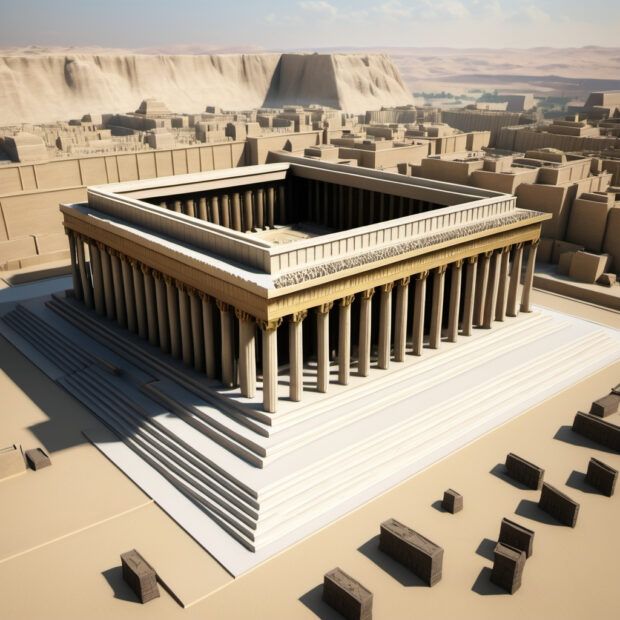
Ezekiel chapters 41 to 48 bring the prophet’s remarkable book to a close with a detailed vision of a new temple, the reordering of Israel’s land, and the return of God’s glory. These chapters are rich with symbolism and provide an awe-inspiring look at God’s plan for restoration after the judgment and exile. The new temple is not just a building, but a representation of God’s renewed relationship with His people, offering hope and a promise of future blessings.
In this blog post, we’ll explore these final chapters of Ezekiel in detail, uncovering their spiritual significance and the hope they offer for God’s people. From the intricate design of the temple to the river of life flowing from it, Ezekiel’s vision reveals God’s ultimate plan for His people—a plan of restoration, holiness, and divine presence.

1. Ezekiel 41-42: The Detailed Design of the New Temple—God’s Perfect Dwelling Place
Ezekiel 41 begins with a meticulous description of the new temple’s interior, providing measurements and details about the structure’s design. The temple is portrayed as a place of perfect symmetry, order, and holiness. This attention to detail reflects the importance of worship and the sanctity of God’s dwelling place.
The measurements and descriptions are so precise that some scholars see the temple as a literal building that will be constructed in the future, while others view it symbolically, representing God’s renewed presence among His people. Either way, the focus is on God’s holiness and the reverence due to Him in worship.
Chapter 42 continues with a description of the temple’s outer courts and chambers, emphasizing the importance of purity and separation from the common. Only those consecrated can enter certain areas, underscoring the need for holiness in approaching God.
Practical Tip: Treat your relationship with God with the reverence it deserves. Worship is not just a routine, but an opportunity to enter into God’s presence with awe and respect.
“And the temple and the sanctuary had two doors.” — Ezekiel 41:23 (KJV)
2. Ezekiel 43: The Return of God’s Glory—A New Beginning
In Ezekiel 43, we witness a profound moment: the glory of the Lord returns to the temple. This echoes the earlier chapters of Ezekiel when God’s glory departed from the temple due to the people’s sin and rebellion. Now, God’s presence returns, signifying reconciliation and restoration.
Ezekiel describes the return of God’s glory with awe, comparing it to the vision he saw by the river Chebar at the beginning of his prophetic ministry. The return of God’s glory symbolizes His renewed covenant with Israel and His willingness to dwell among His people once again.
After the return of God’s glory, God gives Ezekiel specific instructions about the altar and the sacrifices, highlighting the importance of purity and obedience in worship.
Practical Tip: Reflect on areas in your life where you need God’s presence to return. Just as God’s glory returned to the temple, He is always ready to restore and renew your relationship with Him.
“And the glory of the Lord came into the house by the way of the gate whose prospect is toward the east.” — Ezekiel 43:4 (KJV)
3. Ezekiel 44: The Duties of the Priests—A Call to Holiness
Ezekiel 44 focuses on the role of the priests in this new temple. The chapter begins with a reference to the eastern gate, which is now shut, signifying that God’s glory has entered through it and will not depart. The priests, particularly the sons of Zadok, are entrusted with the sacred duty of maintaining the temple’s holiness.
These priests are called to higher standards than ever before. They must be careful in their conduct, attire, and lifestyle, as they serve in God’s holy presence. The emphasis on priestly holiness points to the broader need for God’s people to be set apart, living lives that reflect their relationship with a holy God.
The chapter also contains rules concerning offerings and the inheritance of the priests, emphasizing their unique role in maintaining the purity of worship.
Practical Tip: As believers, we are called to be “a royal priesthood” (1 Peter 2:9). Consider how your life reflects your status as someone set apart for God’s service. Holiness is a daily pursuit.
“They shall teach my people the difference between the holy and profane, and cause them to discern between the unclean and the clean.” — Ezekiel 44:23 (KJV)
4. Ezekiel 45-46: The Holy Portions and Offerings—God’s Provision for Worship
Chapters 45 and 46 provide instructions on how the land is to be divided and how offerings are to be made in the restored Israel. These chapters outline a sacred district for the temple, the city, and the priests, reinforcing the idea that God’s dwelling place is the center of life for His people.
The focus on offerings—whether daily, weekly, or seasonal—demonstrates that worship is meant to be an integral part of life in this restored community. It’s not just about ceremonies but about a heart of gratitude and reverence toward God.
Chapter 46 gives special attention to the feasts and sabbaths, emphasizing the rhythm of worship that sustains the people of God. The emphasis on communal and individual offerings reflects the idea that worship is not confined to the temple but should permeate every aspect of life.
Practical Tip: Build rhythms of worship into your life. Whether through daily prayer, weekly Sabbath, or communal worship, make sure that God is at the center of your life’s schedule.
“Moreover the prince shall not take of the people’s inheritance by oppression, to thrust them out of their possession.” — Ezekiel 46:18 (KJV)
5. Ezekiel 47: The River of Life—A Picture of Healing and Restoration
Ezekiel 47 contains a vision of a river flowing from the temple, starting as a small trickle and gradually becoming a mighty river that brings life wherever it goes. The river flows into the Dead Sea, healing its waters and causing fish to flourish. Trees line the banks of the river, bearing fruit year-round and providing leaves for healing.
This vision of the river symbolizes the life-giving power of God’s presence. It represents spiritual renewal and healing, not just for Israel but for all nations. The river’s source is the temple, indicating that true life and restoration come from being connected to God.
The imagery of the river also points to the New Testament, where Jesus describes Himself as the source of “living water” (John 4:14), promising eternal life to all who come to Him.
Practical Tip: Reflect on your spiritual life. Is it like a trickle, or is it growing into a mighty river that brings life and healing to those around you? Stay connected to God, the source of living water.
“Everything shall live whither the river cometh.” — Ezekiel 47:9 (KJV)
6. Ezekiel 48: The Division of the Land—The Final Restoration of Israel
Ezekiel 48 describes the final division of the land among the twelve tribes of Israel. This chapter serves as a fulfillment of God’s promise to restore His people to their land, showing His faithfulness despite their previous rebellion. The land is divided in a way that reflects fairness and divine order, with the sanctuary and the city at the center.
The chapter concludes with the name of the city: “The Lord is there” (Jehovah-Shammah). This name signifies the ultimate promise of restoration—that God will dwell among His people forever. The vision ends on this note of hope, with God’s presence being the ultimate blessing and source of life for His people.
Practical Tip: Make your life a place where “The Lord is there.” Prioritize God’s presence in everything you do, knowing that His presence brings peace, restoration, and purpose.
“And the name of the city from that day shall be, The Lord is there.” — Ezekiel 48:35 (KJV)
Conclusion: The Vision of Hope and Restoration
Ezekiel 41 to 48 paints a breathtaking picture of restoration, holiness, and God’s enduring faithfulness to His people. The detailed vision of the temple, the return of God’s glory, and the river of life flowing from the sanctuary are all reminders that God desires to dwell among His people and bring healing to the world.
Through these chapters, we see that God’s plan is not just to rebuild a physical structure but to restore His people spiritually, renewing their hearts and minds so that they can live in His presence. This vision of the future points forward to the ultimate fulfillment in Christ, who offers us access to God and the promise of eternal life.
As you reflect on these chapters, consider how they apply to your life today. What areas need renewal? Where is God calling you to deeper worship and greater holiness? The promise of restoration that Ezekiel saw is the same promise that we have today through Jesus Christ: a future filled with hope, healing, and the presence of God forever.
“Behold, the tabernacle of God is with men, and he will dwell with them, and they shall be his people, and God himself shall be with them, and be their God.” — Revelation 21:3 (KJV)


Is it time to rebuild the temple? I think so…