1 Samuel 11 to 15 in the King James Bible takes us through a critical period in the early reign of Saul, Israel’s first king. These chapters capture his initial victories, moments of humility, and, ultimately, his downfall as a leader. We witness a transition from divine favor to rejection, highlighting the importance of obedience to God’s commands.

1 Samuel 11: Saul’s Victory Over the Ammonites
In 1 Samuel 11, Saul’s kingship is solidified as he delivers the people of Jabesh-gilead from the oppression of the Ammonites. The chapter begins with Nahash, the king of the Ammonites, besieging the city of Jabesh. The people, desperate for help, seek terms of surrender. Nahash agrees, but only under the humiliating condition that he can gouge out the right eye of every man in the city, a tactic meant to disgrace and weaken Israel.
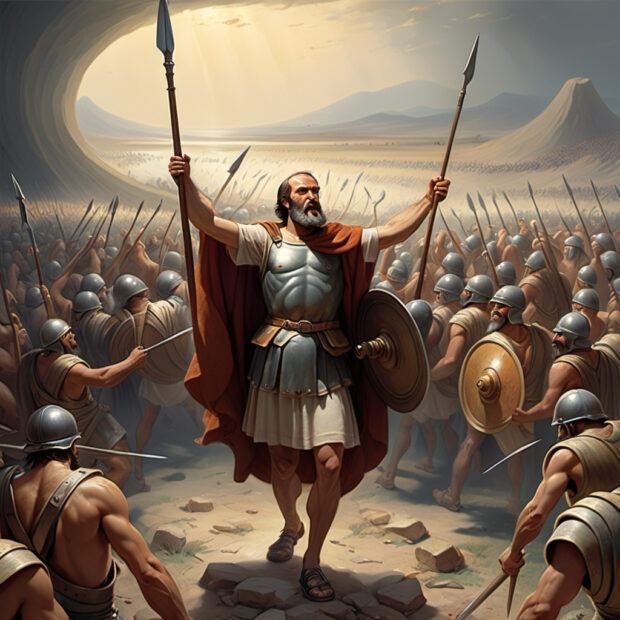
The elders of Jabesh request seven days to seek help from their fellow Israelites, and messengers are sent throughout Israel. When Saul hears of this, he is filled with the Spirit of God, and in a display of decisive leadership, he cuts a yoke of oxen into pieces and sends the pieces throughout Israel, rallying the people to join him in battle. This gruesome act effectively unites the tribes under Saul’s command.
Saul gathers an army of 330,000 men and leads them to a decisive victory over the Ammonites. After the victory, some people suggest that those who had doubted Saul’s kingship should be executed, but Saul, in a moment of humility, refuses, saying, “There shall not a man be put to death this day: for to day the Lord hath wrought salvation in Israel” (1 Samuel 11:13, KJV). The chapter ends with a formal renewal of Saul’s kingship at Gilgal, where the people rejoice and offer sacrifices to God.
1 Samuel 12: Samuel’s Farewell Address
Chapter 12 records Samuel’s farewell address to the people of Israel. As Saul’s reign begins in earnest, Samuel, now an elderly prophet, takes this opportunity to remind the people of their history and their relationship with God. He recalls the many times the Lord had delivered Israel from their enemies, starting from the days of Moses and Aaron.
Samuel also addresses the people’s decision to ask for a king, reminding them that while God granted their request, it was a rejection of God’s direct rule over them. However, Samuel assures them that if both the people and their king obey the Lord, they will prosper.
To demonstrate the seriousness of the situation, Samuel calls upon the Lord, who sends thunder and rain during the wheat harvest, a time when such weather was unusual and harmful. This display of divine power causes the people to fear, and they ask Samuel to pray for them.
Samuel reassures them that God will not forsake His people, but he warns both the people and Saul that they must serve the Lord faithfully or face severe consequences. He promises to continue praying for them and teaching them the right path, saying, “Only fear the Lord, and serve him in truth with all your heart” (1 Samuel 12:24, KJV).
1 Samuel 13: Saul’s First Major Failure
1 Samuel 13 introduces Saul’s first significant misstep as king. The chapter opens with Saul leading Israel against the Philistines, who were a constant threat to the Israelites. Saul’s son, Jonathan, initiates the conflict by attacking a Philistine outpost at Geba, which leads the Philistines to gather a massive army to retaliate.
Fearing the Philistine army, many Israelites hide in caves, and some even flee across the Jordan. Saul, stationed at Gilgal, waits for Samuel to come and offer a sacrifice before engaging in battle, as Samuel had instructed him earlier. However, Samuel is delayed, and as the troops begin to scatter in fear, Saul grows impatient.
In a rash decision, Saul offers the sacrifice himself, violating God’s command that only the prophet should perform this priestly duty. Just as Saul finishes the offering, Samuel arrives and rebukes him. Samuel tells Saul that his disobedience will cost him his dynasty: “But now thy kingdom shall not continue: the Lord hath sought him a man after his own heart” (1 Samuel 13:14, KJV). This prophecy foreshadows the rise of David.
1 Samuel 14: Jonathan’s Boldness and Saul’s Rash Oath
In 1 Samuel 14, the focus shifts to Jonathan, Saul’s son, who exhibits great faith and boldness. Without informing his father, Jonathan and his armor-bearer launch a surprise attack on a Philistine outpost, trusting that the Lord will give them victory. The attack causes confusion among the Philistines, and their army is thrown into disarray.
Seeing the chaos, Saul musters his troops and joins the battle, leading to a great victory over the Philistines. However, the chapter highlights one of Saul’s many leadership flaws. In the heat of the battle, Saul makes a rash oath, commanding that no one should eat until evening, under penalty of death. This hinders the troops, who are already exhausted.
Jonathan, unaware of his father’s command, eats some honey he finds in the forest. When Saul later finds out, he declares that Jonathan must die for breaking the oath, despite his key role in the victory. However, the people intervene, saying, “Shall Jonathan die, who hath wrought this great salvation in Israel? God forbid” (1 Samuel 14:45, KJV), and Jonathan’s life is spared. This episode further highlights Saul’s tendency to act impulsively and unwisely.
1 Samuel 15: Saul’s Final Rejection
Chapter 15 marks the climax of Saul’s downfall as king. God commands Saul, through Samuel, to utterly destroy the Amalekites, a people who had attacked Israel during the Exodus. Saul is instructed to leave nothing alive, including livestock, as an act of divine judgment.
Saul gathers his army and defeats the Amalekites, but instead of obeying God’s command fully, he spares Agag, the king of the Amalekites, and the best of the livestock. When Samuel confronts Saul, Saul initially tries to justify his actions by claiming that the animals were spared to offer sacrifices to the Lord.
Samuel’s response is one of the most famous in the Bible: “Hath the Lord as great delight in burnt offerings and sacrifices, as in obeying the voice of the Lord? Behold, to obey is better than sacrifice, and to hearken than the fat of rams” (1 Samuel 15:22, KJV). Samuel declares that Saul’s disobedience is like the sin of witchcraft and that because Saul has rejected God’s command, God has rejected him as king.
As Samuel turns to leave, Saul desperately grabs Samuel’s cloak, tearing it. Samuel uses this as a symbolic moment to declare that “the Lord hath rent the kingdom of Israel from thee this day” (1 Samuel 15:28, KJV) and that it will be given to a man better than Saul, pointing to David. The chapter ends with Samuel executing Agag and departing from Saul, with Samuel grieving over Saul’s rejection by God.
Conclusion: The Rise and Fall of a King
1 Samuel 11 to 15 chronicles the rise of Saul as a military leader and his subsequent fall due to his disobedience to God’s commands. These chapters illustrate the weight of leadership and the importance of obedience to God’s word. Saul’s impatience and failure to follow God’s instructions reveal the dangers of relying on human wisdom over divine guidance. As Saul’s reign begins to unravel, the stage is set for the rise of David, the man after God’s own heart, who will eventually take his place as king of Israel.