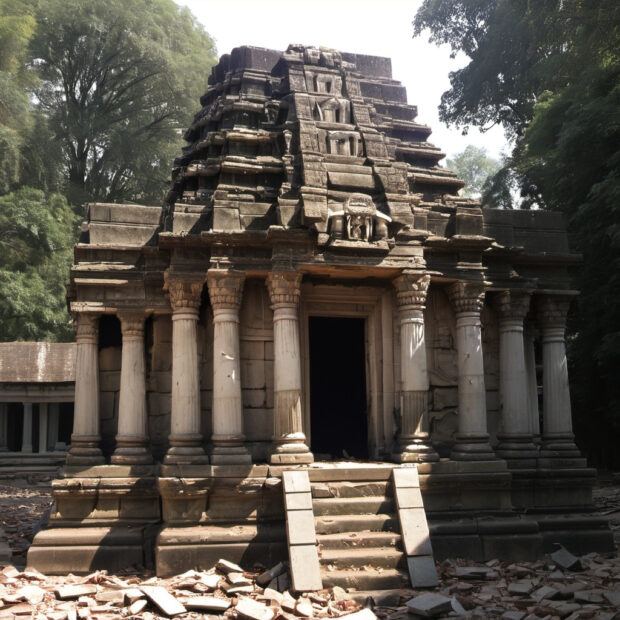
The chapters in 2 Chronicles 24 to 31 cover a broad span of events during the reigns of several kings of Judah, from the beginning of Joash’s reign to the religious reforms of Hezekiah. These chapters show the rise and fall of spiritual dedication, highlighting the importance of godly leadership and the consequences of forsaking God’s ways.
Let’s explore these chapters and the critical lessons they offer.

Chapter 24: The Reign of Joash and the Temple Restoration
Chapter 24 begins with the reign of King Joash, who ascended to the throne as a young child under the guidance of Jehoiada the priest. Joash’s reign is initially characterized by faithfulness to God, largely due to the influence of Jehoiada. He reigned for 40 years in Jerusalem and was commended for doing what was right in the sight of the Lord during Jehoiada’s lifetime.
One of Joash’s significant accomplishments was the restoration of the Temple. Over time, the Temple had fallen into disrepair, and Joash initiated a campaign to collect funds from the people of Judah to restore it. A chest was placed at the entrance of the Temple for voluntary offerings, and the people generously contributed. The collected funds were used to repair the Temple, and soon, the house of God was restored to its former glory.
However, after the death of Jehoiada, Joash’s reign took a dark turn. Without Jehoiada’s guidance, Joash became susceptible to the influence of corrupt officials, leading him away from the worship of God. He abandoned the Temple and turned to idolatry. When Zechariah, the son of Jehoiada, rebuked the king and the people for their unfaithfulness, Joash ordered his execution. Zechariah’s death marked a pivotal moment, as his dying words predicted that God would avenge his murder.
Indeed, Joash’s downfall soon followed. The chapter ends with the invasion of the Syrians, who inflicted severe damage on Judah. Joash was wounded in the attack and later assassinated by his servants as an act of retribution for Zechariah’s murder. Joash’s legacy, once promising, was tainted by his later actions, and he was not honored with burial among the kings.
Chapter 25: The Reign of Amaziah and His Defeat by Israel
Amaziah, the son of Joash, became king after his father’s assassination, and his reign is detailed in chapter 25. Amaziah initially followed God’s commandments, but his obedience was partial and inconsistent. Early in his reign, Amaziah avenged the murder of his father by executing the servants responsible but obeyed the Law by not killing their children, as instructed in Deuteronomy 24:16.
Amaziah then assembled a large army to wage war against the Edomites. He hired mercenaries from Israel, but a prophet warned him not to rely on the soldiers from Israel, as they were unfaithful to God. Amaziah obeyed the prophet’s command and sent the mercenaries away, despite the financial loss. He then led Judah to victory over the Edomites.
However, after his victory, Amaziah made a fatal mistake: he brought back the idols of the Edomites and began to worship them. A prophet rebuked Amaziah for this, but the king refused to listen, leading to further spiritual decline.
Amaziah’s pride eventually led him into conflict with King Joash of Israel. He provoked a battle with Israel, which resulted in Judah’s defeat. Joash captured Amaziah, plundered the Temple and palace, and left Judah humiliated. The chapter concludes with Amaziah’s eventual assassination after a conspiracy arose against him.
Chapter 26: The Reign of Uzziah and His Prideful Fall
Uzziah, also known as Azariah, succeeded his father Amaziah and reigned for 52 years in Jerusalem. Uzziah’s reign is recorded as a time of prosperity and success. He sought the Lord during the early years of his reign, and as long as he sought God, he was blessed with military victories and economic growth. Uzziah expanded Judah’s territory, fortified Jerusalem, and developed a strong army equipped with advanced weaponry for the time.
However, Uzziah’s success led to pride. In a moment of arrogance, he entered the Temple to burn incense on the altar of incense, a duty reserved only for the priests. The priests confronted him, warning him that he was acting in violation of God’s laws. In his anger, Uzziah refused to listen, and at that moment, God struck him with leprosy. The leprosy appeared on his forehead, and Uzziah was quickly ushered out of the Temple.
From that day forward, Uzziah lived in isolation, cut off from the house of the Lord, while his son Jotham governed in his place. Uzziah’s prideful overreach, despite his earlier successes, brought about his downfall, and he was remembered with a legacy tainted by his final act of rebellion against God.
Chapter 27: The Reign of Jotham and His Faithfulness
Jotham, the son of Uzziah, reigned for 16 years, and unlike his father, he faithfully followed the Lord throughout his reign. Jotham is noted for his military successes and building projects, including the fortification of Jerusalem and the construction of cities and towers in Judah.
The chapter emphasizes that Jotham “prepared his ways before the Lord his God” (2 Chronicles 27:6), signifying his consistent devotion to God. As a result, he was blessed with strength and success. Despite his personal faithfulness, the people of Judah continued to act corruptly, and spiritual decline was still present in the nation.
Jotham’s reign is relatively short in terms of narrative, but his faithfulness is contrasted with the spiritual state of the people, foreshadowing the challenges his son Ahaz would face.
Chapter 28: The Wicked Reign of Ahaz and Judah’s Decline
Ahaz, the son of Jotham, reigned for 16 years, and his reign marked one of the lowest points in Judah’s spiritual history. Ahaz abandoned the ways of his father and led Judah into rampant idolatry. He worshipped Baal, made molten images for pagan gods, and even sacrificed his own children in the fire as part of his idolatrous practices.
Ahaz’s wickedness led to severe consequences for Judah. God allowed the kings of Syria and Israel to invade, resulting in great losses for Judah. The Israelites captured 200,000 prisoners from Judah, but through the intervention of the prophet Oded, the captives were eventually released and returned.
Despite these calamities, Ahaz did not turn back to God. Instead, he sought help from the Assyrians, further entangling Judah in foreign alliances and leading to more destruction. Ahaz’s reign ended in shame, and he was not buried in the tombs of the kings.
Chapter 29: Hezekiah’s Reforms and the Restoration of the Temple
Chapter 29 introduces Hezekiah, the son of Ahaz, whose reign marked a dramatic reversal of the spiritual decline that had plagued Judah. Hezekiah began his reign by immediately turning the people back to the Lord. In the first month of his reign, Hezekiah reopened the doors of the Temple, which had been shut during Ahaz’s reign.
Hezekiah assembled the priests and Levites, commanding them to sanctify themselves and cleanse the Temple. They obeyed, and after eight days, the Temple was fully purified. Hezekiah then reinstituted proper worship, including burnt offerings and musical worship, as prescribed in the Law of Moses and Davidic traditions.
Hezekiah’s reforms were not only physical but spiritual. He called the people of Judah and Israel to return to the Lord and renew their covenant. The chapter emphasizes Hezekiah’s sincerity and dedication to restoring the worship of God, and the people responded with joy and enthusiasm.
Chapter 30: The Celebration of the Passover
One of Hezekiah’s most significant reforms was the celebration of the Passover, which had not been observed for many years. Hezekiah invited not only the people of Judah but also the remnants of the northern tribes of Israel to come to Jerusalem for the Passover celebration. Messengers were sent throughout the land, calling the people to repent and return to the Lord.
While some from Israel mocked the invitation, many others humbled themselves and came to Jerusalem. The Passover celebration was a great success, lasting seven days, and the people were filled with joy and unity. Hezekiah and the leaders extended the festival for another seven days, making it a 14-day celebration of worship and thanksgiving to God.
This chapter highlights the spiritual renewal that took place during Hezekiah’s reign, as the people returned to the Lord with glad hearts.
Chapter 31: Hezekiah’s Continued Reforms and Prosperity
Chapter 31 continues to describe Hezekiah’s reforms. After the Passover, the people went throughout Judah and even into the territory of Israel, destroying idols, high places, and altars dedicated to false gods. Hezekiah reinstated the proper division of duties for the priests and Levites, ensuring that the Temple worship continued according to the Law of Moses.
Hezekiah also implemented a system of tithing and offerings to support the priests, Levites, and the work of the Temple. The people responded generously, bringing abundant offerings of grain, wine, oil, and livestock. The chapter notes that Hezekiah “wrought that which was good and right and truth before the Lord his God” (2 Chronicles 31:20). His reign was marked by prosperity, spiritual renewal, and divine favor.
Conclusion: Spiritual Renewal and the Power of Godly Leadership
The chapters from 2 Chronicles 24 to 31 illustrate the importance of godly leadership and the impact it has on a nation. From the faithfulness of Joash under Jehoiada’s guidance to the remarkable reforms of Hezekiah, these stories show how the fate of Judah was closely tied to the spiritual condition of its leaders. When the kings sought the Lord and upheld His commandments, Judah experienced peace and prosperity. When they turned away from God, the nation suffered defeat, invasion, and decline.
These chapters serve as a reminder of the importance of remaining faithful to God’s word and the blessings that come from seeking Him wholeheartedly.